Repairs · Scugog
Garage Door Bottom Seal Replacement in Scugog
Every mild afternoon the snow melts off the car, runs to the door, and by morning the rubber strip along the bottom is frozen to the concrete. Last week the opener lifted the door and left half the seal on the floor.
Garage Door Bottom Seal Replacement
In plain words
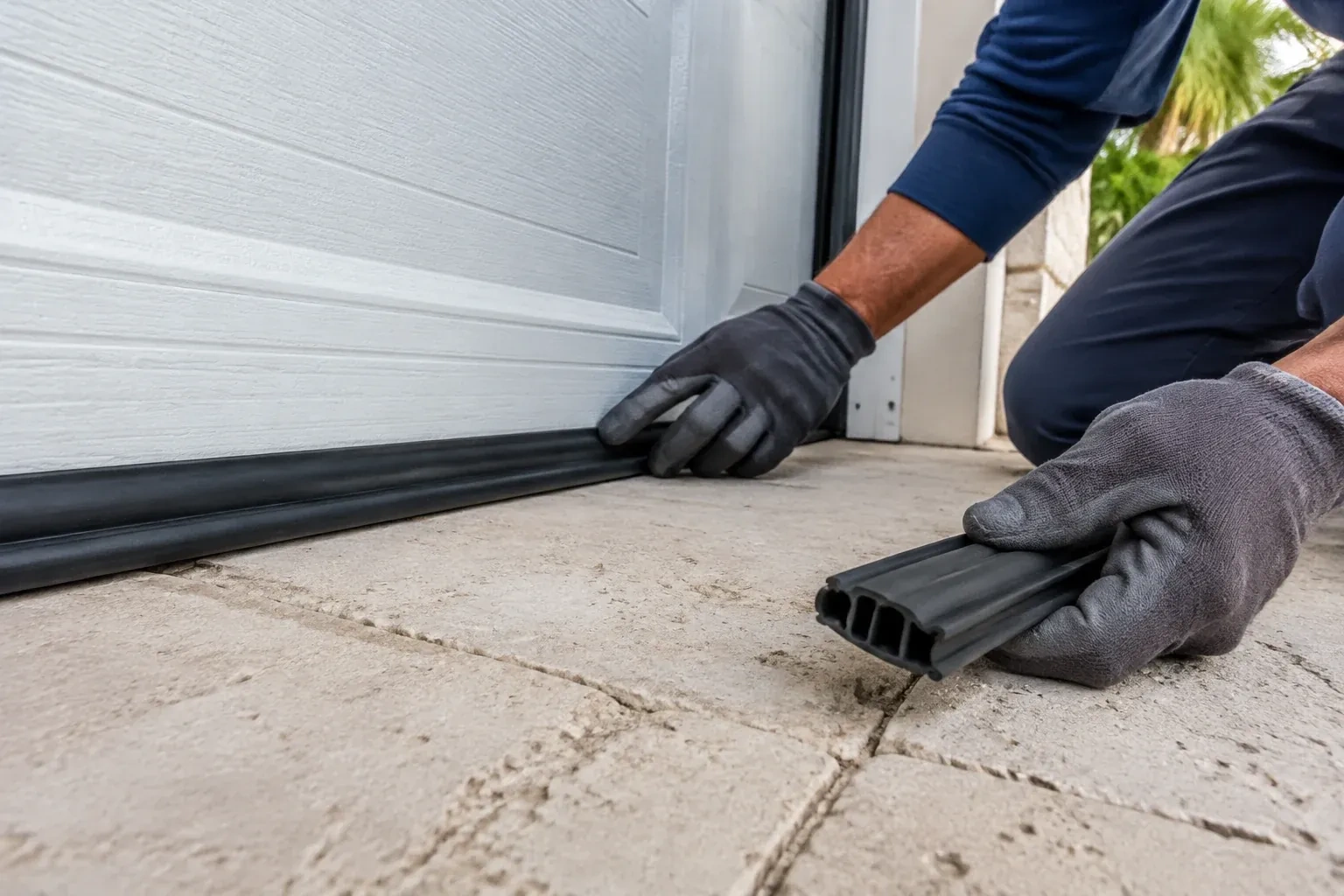
What you have afterwards is a door that closes onto a single soft line of contact from jamb to jamb. Daylight under the door is much reduced, the draft across the floor eases, wind-blown leaves and snow are kept out more effectively, and the tighter gap makes the route in harder for mice. The opener has been reset so the door lands gently on the new strip instead of pressing it flat. You also leave knowing the seal's profile and size, which makes the next replacement a matter of one phone call, and a couple of simple habits for winter that keep the new seal from freezing to the floor.
How the visit goesThe gap under the door is a finger wide at one end and nothing at the other. The door itself looks straight, but the floor drops away toward the corner where the slab has settled, and drafts pour through the wedge.
Scugog
How the visit goes
Which retainer and which profile
Next the retainer along the bottom rail is identified. Most steel doors carry an aluminum extrusion with two channels that take the T-shaped or beaded edges of a U-shaped seal; some insulated doors have the channel moulded into a plastic bottom cap; older doors may have a single channel; wood doors often have a strip nailed straight to the rail. The technician measures the channel spacing and the T or bead size, checks the door width, and notes the height of the old strip. A seal chosen from these measurements slides in cleanly and holds, which is the difference between a replacement that lasts and one that works loose.
Wood doors and nail-on strips
A wood garage door usually carries a flat or angled strip of vinyl or rubber nailed directly to the bottom rail rather than a channel seal. The technician removes the old strip and nails, checks the rail for soft spots and cupping, and treats or dries damp wood as needed. The new strip is positioned so its lip angles toward the outside and touches the floor along the full width, then fastened with galvanized nails or screws at close, even spacing so it cannot ripple. On a rail that follows an uneven floor, the strip's flexibility takes up the difference.
What to look for each season
Once a season, close the door, turn off the lights and look along the floor. You are checking for a line of daylight, a corner where the seal hovers, an end that has slipped from its channel, and cracks along the fold of the bulb. Run a hand along the strip for stiff or brittle patches. Then watch the door close under power once and notice how it lands. A change in any of these is worth a call while the fix is a seal or an adjustment rather than a torn strip dragged through a winter. The check takes less time than reading this paragraph.
Garage Door Bottom Seal Replacement
In the van
- Self-drilling retainer screws
- Track clamps
- Straightedge and tape measure
- Aluminum bottom seal retainer
- Silicone spray lubricant
What affects the quote
Same fees day, night or weekend
1Seal profile and size
T-style, bead and bulb profiles in different widths and heights sit at different points on the parts list, and the retainer on your door decides which one is used.
2Bottom section repairs
A rusted, dented or bowed steel bottom rail, or a rotted wood rail, is pointed out and any repair or reinforcement offered as an option beside the seal work.
3Number of doors
Two single doors are two seals, two inspections and two opener resets. The travel is shared, so doing both in one visit costs less than two separate calls.
Garage Door Bottom Seal Replacement: questions
What are bottom seals made of, and which suits cold weather?
Most are vinyl, which resists sun and moisture well but stiffens in deep cold. Rubber compounds stay flexible at low temperatures and follow an uneven floor closely, though they can harden after many years of sun. Silicone stays supple in heat and cold and resists cracking, at a higher cost. For a door that faces the weather, a rubber or silicone profile is usually the sounder long-term choice.
Does a wood garage door use the same kind of seal?
Usually not. Wood doors most often carry a flat or angled strip of vinyl or rubber nailed directly to the bottom rail, rather than a profile that slides into a retainer. Replacement means removing the old strip and nails, checking the rail for soft or cupped wood, and fastening a new strip so its lip angles outward and meets the floor along the full width. A retainer can be added to a sound rail if you prefer a channel seal.
How can I tell that the bottom seal needs replacing?
Close the door, turn off the lights and look along the floor from inside. Daylight showing, a strip that feels hard or cracks when pressed, a bulb that has flattened and stays flat, an end hanging out of its channel, chew marks or missing pieces are all signs. So are leaves, snow or a puddle inside the door after weather. Any one of these means the seal has stopped doing its job.
Repair & Maintenance
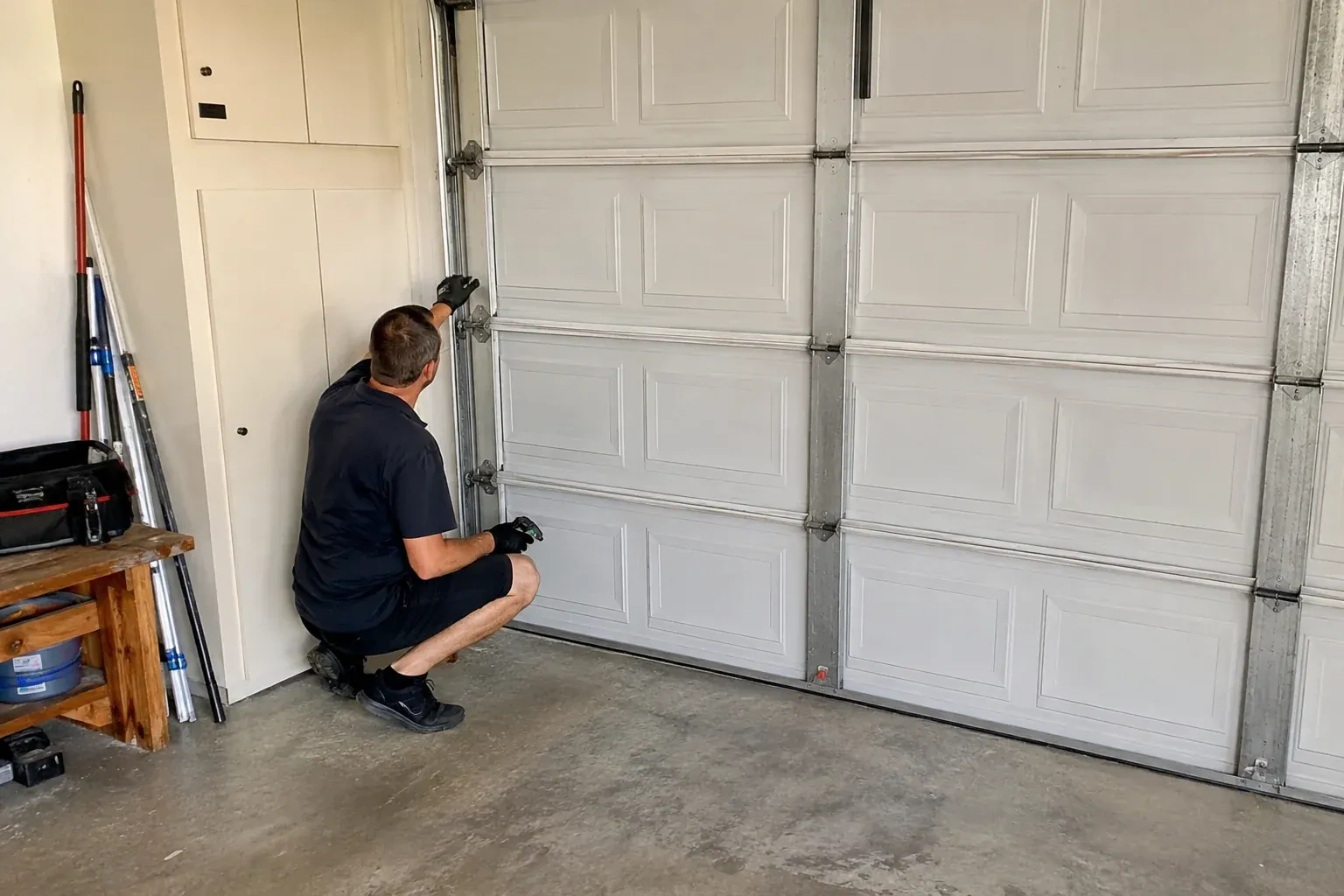
Garage Door Bottom Seal Replacement near you
People in Scugog call about garage doors for many reasons, and we have a service for each: the door that stopped, the one that got loud, the one that lets in cold air, the remote that died, the panel that got dented, and the door that has simply had its day.