New Doors · Williams Point
High-Lift Garage Door Conversion in Williams Point
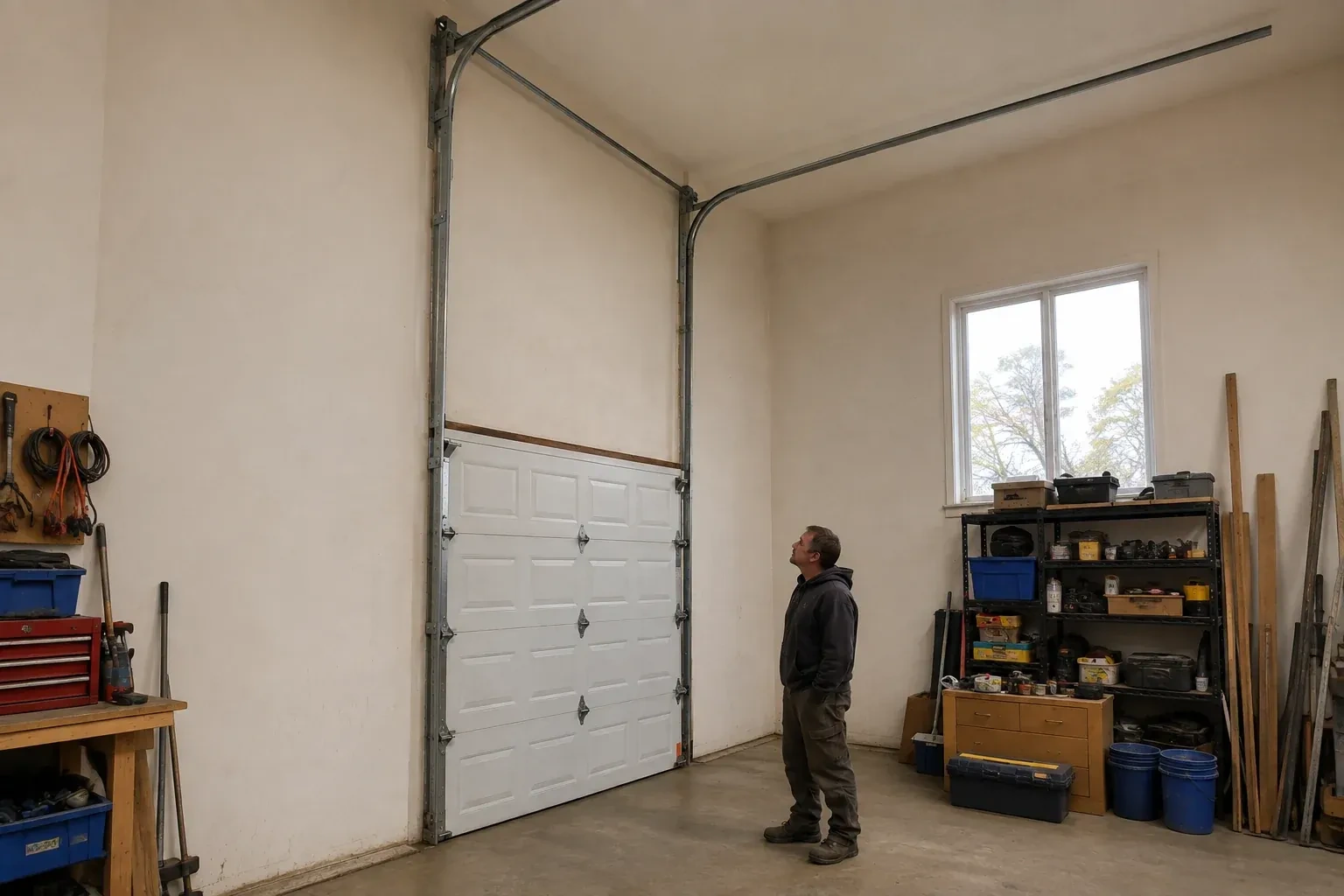
The door works well, although the open panels sit far beneath a sloped or raised ceiling. You are exploring whether the track, counterbalance and operator can be redesigned to follow the room more closely.
High-Lift Garage Door Conversion
In plain words
A high-lift project can often retain sound door sections while changing the hardware that guides and balances them. Their condition, reinforcement, hinges and rollers are inspected first, because the door still has to travel smoothly through a steeper path. New track geometry is paired with drums that manage the changing cable radius, cables of suitable length and torsion springs chosen for the actual door. This selective approach focuses the conversion on the components affected by the new movement while keeping compatible material in service.
How the visit goesThe garage has a tall ceiling, yet the horizontal tracks sit much lower than the lights and joists. That unused wall height makes the open door feel like a low shelf across an otherwise generous room.
Williams Point
How the visit goes
Review the counterbalance as a system
The existing springs are not judged by appearance alone. Door weight, added vertical travel, drum geometry, cable path, shaft length and desired cycle characteristics all shape the new counterbalance specification. The technician records spring tags where present, shaft diameter, bearing locations, drum type and cable condition, then uses the proposed layout to calculate the replacement set. This system review is what lets the door feel controlled from floor to open position, even though the panels now follow a substantially different route.
Integrate the operator and protective devices
Once the door moves well by hand, the planned operator arrangement is mounted and connected. Shaft alignment, torque transfer, emergency release access, power location and control wiring are checked for the selected equipment. Travel limits are set to stop the door at its designed closed and open positions without driving against the hardware. Photoelectric sensors and other applicable protective functions are aligned and tested. The operator assists a balanced door; it is commissioned after the mechanical system proves it can carry the new path cleanly.
Seasonal observation without adjustment
Temperature and humidity shifts can change lubrication behaviour, door weight and how materials move, while road salt and moisture may reach lower hardware. From a safe position, look for smooth travel, an even bottom edge and cables that remain neatly seated. Listen for a new scrape or repeated contact at the transition. Cleaning accessible track surfaces and following the manufacturer-listed lubrication points supports regular care. Spring, cable, drum and bottom-bracket changes remain technician work because those components carry the counterbalance load.
High-Lift Garage Door Conversion
In the van
- High-lift cable drums
- Braced back hangs
- Centre bearing support
- Track and flag brackets
- High-lift vertical tracks
What affects the quote
Same fees day, night or weekend
1Available headroom and backroom
Wall height above the header and clear ceiling depth shape the feasible high-lift dimension, transition location and final horizontal storage run.
2Condition of reusable sections
Sound panels and hardware may remain in service, while worn hinges, rollers, top fixtures or damaged reinforcement add related work to the conversion.
3Framing and attachment readiness
Clear, suitable support points simplify installation; missing blocking, concealed conditions or structural questions create preparatory work and coordination outside the basic hardware change.
High-Lift Garage Door Conversion: questions
What information helps assess feasibility from photos?
Useful photos show the full inside opening, both track sides, the wall above the header, the complete ceiling run, spring and shaft area, opener, beams, lights and other obstructions. Include a wider image showing the planned vehicle lift or equipment zone. Measurements remain necessary, but clear images help identify questions and prepare an efficient site assessment.
What should be moved before the installation visit?
Clear vehicles, shelving contents, loose tools and stored items from the opening, side walls and overhead work zone identified during assessment. Provide access to power controls and the operator. If a vehicle lift is already present, leave it in the agreed position and share its operating dimensions. A tidy bay supports safe equipment placement and accurate alignment work.
Will the conversion make the garage door louder?
A properly aligned system should travel smoothly, although its sound may differ because rollers follow a longer vertical route and the operator arrangement may change. Track spacing, roller condition, hinge movement, spring setup and secure supports all influence noise. Final cycling establishes a normal sound baseline, while care follows the lubrication guidance for the installed door components.
Installation & Upgrades
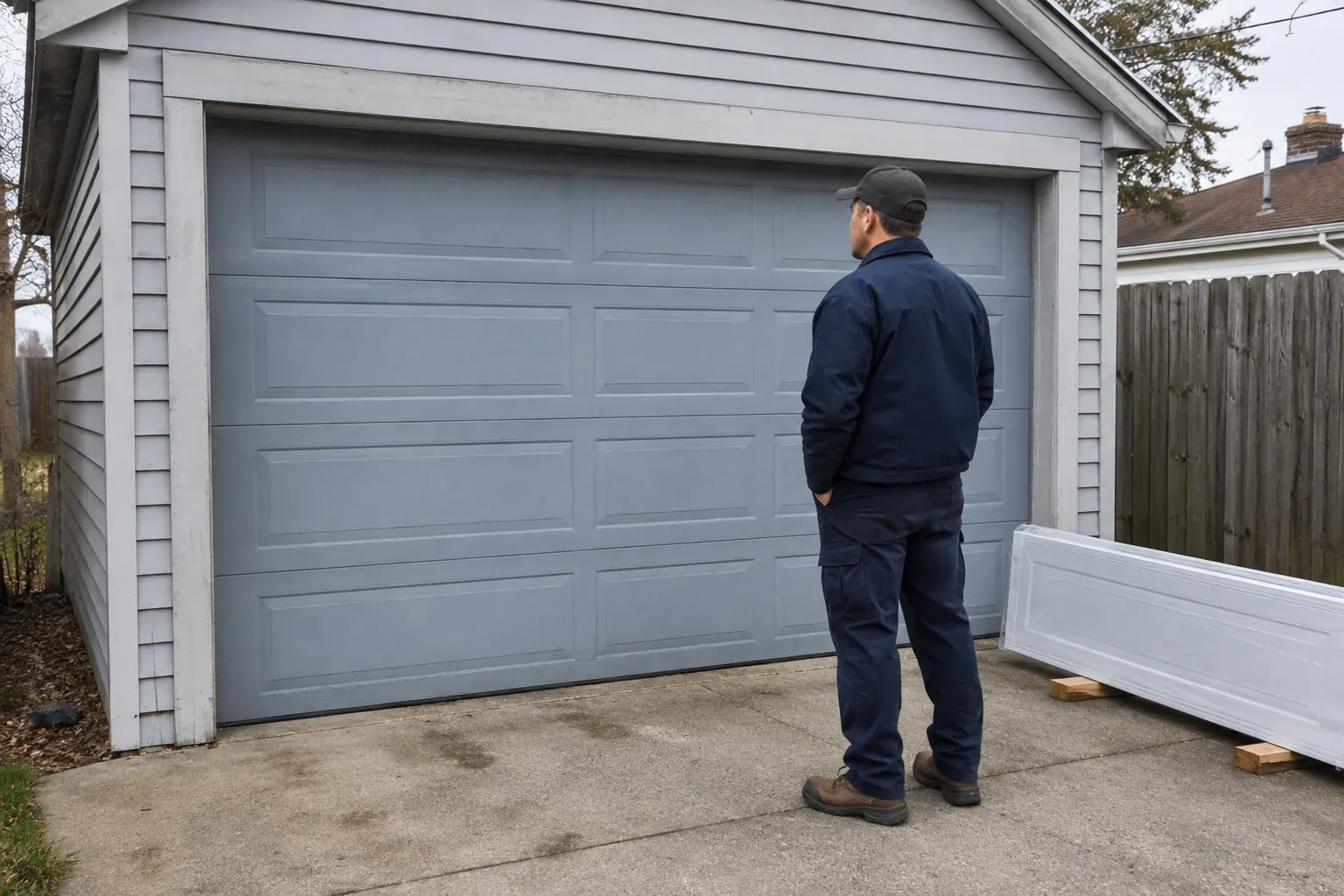
- Insulated Steel Garage Door InstallationThe opener strains as the heavy older door starts upward, and manual movement feels uneven.
- Wind-Rated Garage Door ReplacementThe current double door shudders when pressure changes outside, and daylight appears briefly along…
- Carriage-House Garage Door InstallationTwo garage openings sit side by side, and small differences in window spacing or decorative…
High-Lift Garage Door Conversion near you
Garage doors in Williams Point go through the same cycle: hardware wears, springs tire, openers age, and eventually the door itself is due. We offer a service for each stage, so you can maintain what you have, repair what has failed, or replace the door when that is the sensible choice.