New Doors · Manchester
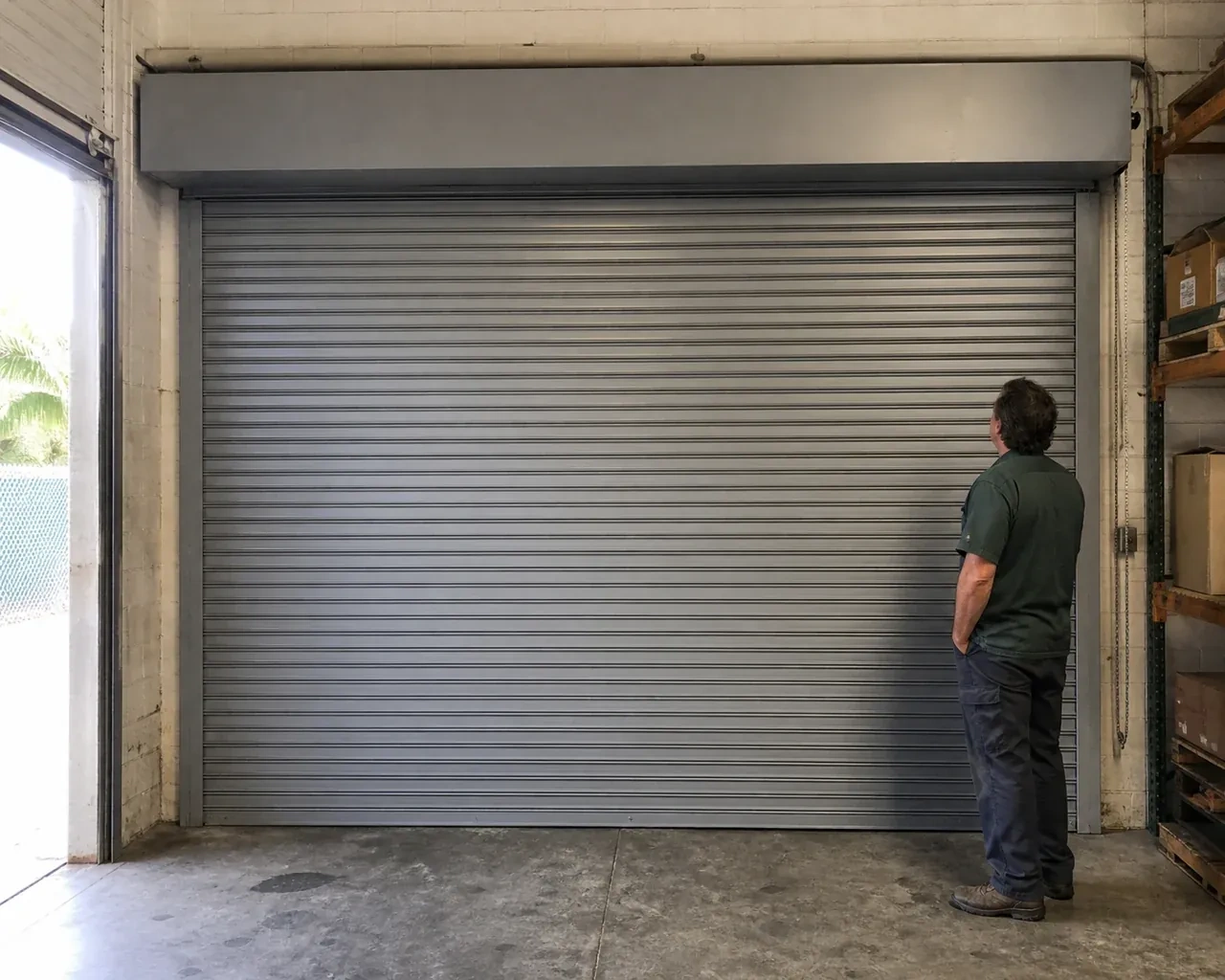
Commercial Rolling Door Repair in Manchester
A lift truck clipped the lower curtain during unloading. Now two slats are bowed, an endlock catches halfway up, and each attempt to cycle the door pulls the damaged section farther toward one guide.
Commercial Rolling Door Repair
In plain words
Exterior rolling doors work at the boundary between indoor operations and winter weather. Hardened bottom seals leave daylight, ice holds the bar to the sill, and salt-laden grit can collect where the curtain enters its guides. Service separates weather effects from alignment or balance faults, cleans the travel path and renews damaged sealing parts where included. The curtain is then checked for even contact at the floor and smooth entry into the coil. Care guidance focuses on keeping drains, guides, sensor faces and the threshold clear while using only the lubricant named for the door.
How the visit goesA metallic clatter now comes from inside the hood whenever the curtain coils. The sound follows each revolution, the travel has become jerky, and fine metal dust is visible near one bracket and bearing.
Manchester
How the visit goes
Start with the operating story
The first clues come from the people who use the opening. The technician asks whether the change appeared after an impact, power interruption, cold night or gradual increase in noise; where the curtain stops; which control was used; and how many cycles the door normally sees. Staff can also point out a lock that sticks, a manual chain that has become heavy or a sensor that needs repeated cleaning. That history narrows the inspection before any cycling begins and distinguishes a one-time obstruction from wear that has been developing across the whole assembly.
Repair the operator and manual drive
Operator work begins after the curtain moves correctly without being dragged through a bind. The technician services the authorised brake, drive, limit or control components, sets chain alignment and tension where applicable, and confirms the emergency hoist or disconnect follows its intended sequence. A worn hand-chain wheel, keeper or reduction component is corrected so manual operation remains controlled. Electrical supply or building wiring concerns are recorded for the responsible trade instead of hidden inside a mechanical adjustment. The operator is then coupled to a balanced door and its open and closed stopping points are established from the actual travel.
Predictable travel through the opening
After repair, staff have a door that follows a repeatable path from sill to hood. The bottom bar rises level, slats enter both guides without a recurring scrape, and the curtain forms an orderly coil rather than wandering toward one bracket. Open and closed limits match the usable doorway, and the normal control produces the expected start, stop and direction. The technician demonstrates a complete cycle and points out the ordinary sounds of the assembly so a future change is easier to recognise. This clear operating baseline is often the most useful outcome for a busy facility.
Commercial Rolling Door Repair
In the van
- Roller chain and sprockets
- Operator brake and limits
- Photoelectric sensors
- Barrel and headplate brackets
- Windlocks and curtain fasteners
What affects the quote
Same fees day, night or weekend
1Extent of curtain damage
One serviceable slat differs from a distorted group that has pulled endlocks sideways or damaged the coil. Material, profile, finish and number of affected curtain pieces guide the scope.
2Traffic-control requirements
Loading schedules, pedestrian routes, lift-truck lanes and access to both faces determine how the work zone is maintained. Facility support and alternate routing form part of the service plan.
3Controls and interlocks
Three-button stations, key controls, lock interlocks, pass-door interlocks and access-system inputs create different diagnostic paths. The quote identifies which door-side controls are included in testing.
Commercial Rolling Door Repair: questions
What happens to a powered door during a power interruption?
Commercial operators commonly include a manual hoist, hand chain or disconnect arrangement, but the sequence varies by system. Staff are shown the intended changeover and normal manual effort after repair. The door must still move freely and remain balanced; the emergency method is an operating feature, not a substitute for correcting a binding curtain or worn component.
What can facility staff check between service visits?
Staff can observe bottom-bar level, new dents or rub marks, guide debris, loose visible fasteners, torn seals, sensor cleanliness, unusual sounds and changes in operating effort. They can keep the sill and doorway clear and record impacts. Spring tension, bracket release and internal repairs remain controlled technician tasks because those areas involve curtain weight and stored energy.
Will operations have to stop around the doorway?
The opening and its adjacent traffic area need to remain controlled during inspection, repair and test cycles. Facilities often route people, lift trucks and deliveries through another path while that work is active. Planning around shipping periods, stored goods and access to both faces of the door helps define a workable service window and equipment setup.
Installation & Upgrades
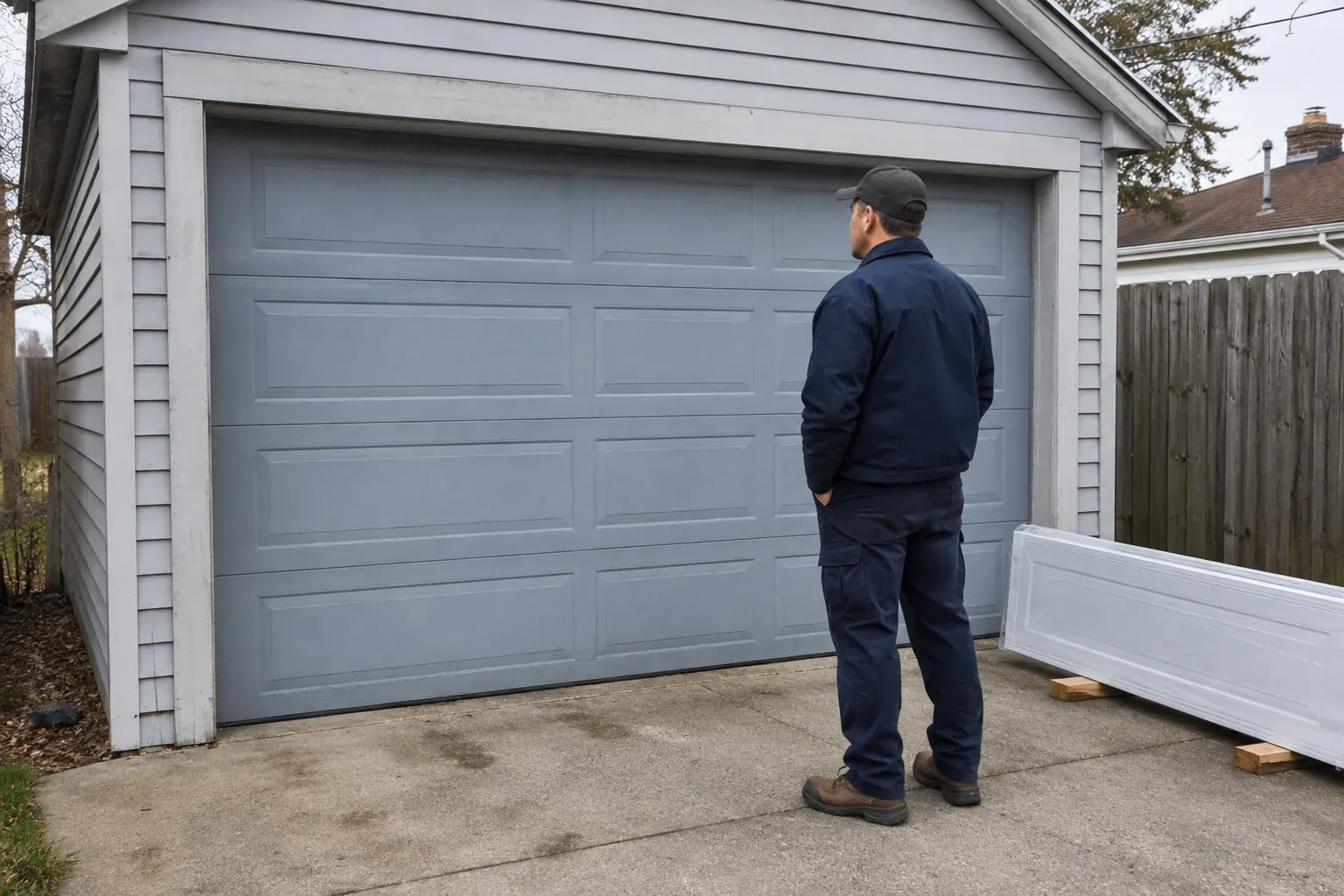
- Insulated Steel Garage Door InstallationThe opener strains as the heavy older door starts upward, and manual movement feels uneven.
- Wind-Rated Garage Door ReplacementThe current double door shudders when pressure changes outside, and daylight appears briefly along…
- Carriage-House Garage Door InstallationTwo garage openings sit side by side, and small differences in window spacing or decorative…
Commercial Rolling Door Repair near you
Most calls from Manchester start with a symptom rather than a part name: a bang, a door stuck halfway, a remote that only works from the driveway. Below are the services behind those symptoms, from spring and cable replacement to opener repair, panel work and complete door installation.