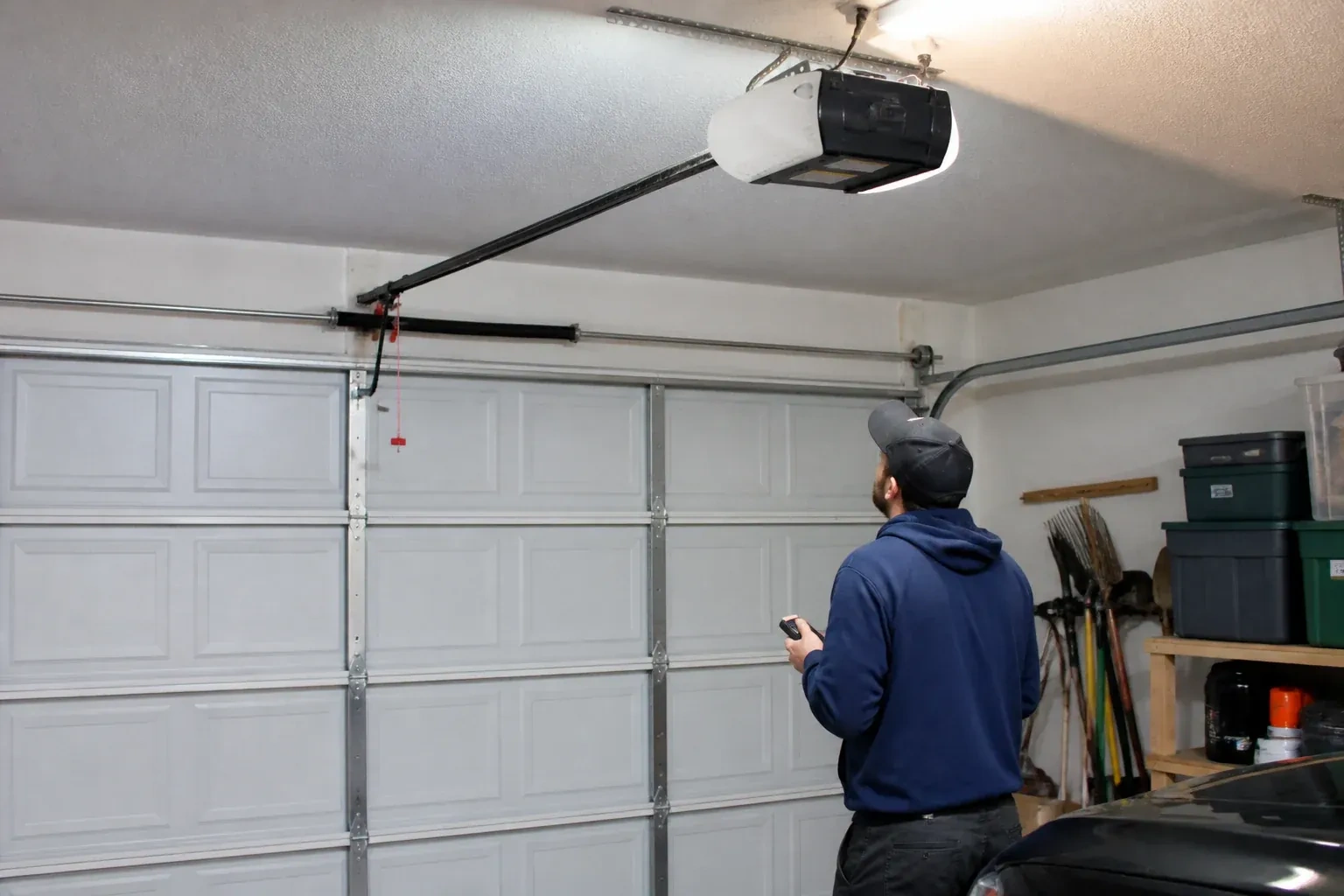
Openers · Caesarea
Garage Door Opener Diagnosis and Repair in Caesarea
The wall button works every time. The remote only works if you are practically under the door; from the end of the driveway it does nothing at all.
Garage Door Opener Diagnosis and Repair
In plain words
Garage door opener diagnosis is a fault-finding visit with a fixed order of tests. The technician confirms power at the ceiling receptacle, tries each control on its own, checks the safety sensors and their indicator lights, examines the drive train from motor to trolley, and reads any flash code the unit is showing. Only then is a part named, because a dozen different faults look identical from the driveway and guessing at the part costs you a second visit. When the cause is a small component, the repair is made while the technician is there; when it is not, you get a clear account of what comes next.
How the visit goesFor a few days there was a grinding sound whenever the door started moving. Now the motor spins freely and the door stays exactly where it is. On the hood of the car there is a scatter of white plastic shavings that fell from the unit above.
Caesarea
How the visit goes
One control at a time
Each way of telling the door to move is tried on its own: the wall control, every remote, the outside keypad and, if fitted, the phone app. The pattern of what works tells a story. If the wall button works and nothing wireless does, the receiver, the remote batteries or a lock setting is suspect. If a remote works only up close, range and interference are the topic. If nothing at all works but the unit's light responds, the fault is downstream of the controls. The technician also checks the wall control's own indicator, which on most models blinks continuously when lock mode has been switched on by accident.
When replacement is the honest answer
Sometimes the diagnosis points past repair. A head unit from before photo eyes were standard, a board no longer manufactured, a motor burnt out in a housing whose gear train is also worn, or a chain-drive unit that has already had two gear kits are all cases where replacing the opener serves you better than another patch. The technician sets out what was found, why repair is a poor fit, and what a modern unit offers: a belt or direct drive for quiet, battery backup for outages, and the safety features the standard requires. The choice remains yours, and the door is left safe in the meantime.
Remotes, codes and who can reach them
Your controls are left tidy. Every remote is programmed and tested, the keypad code is one you chose, and you know which coin or cylinder cell each device takes. You know what the wall control's lock button does and how to tell when it is on, so a visitor cannot strand you by pressing it. Remotes are kept away from children, and the wall control sits about a metre and a half up, in sight of the door and away from moving parts. If your opener connects to a phone app, that link has been checked and the account is in your name.
Garage Door Opener Diagnosis and Repair
In the van
- Photo-eye sensor pair
- Start capacitor
- Remote batteries (coin and cylinder cells)
- Logic board or receiver
- Wall control
What affects the quote
Same fees day, night or weekend
1Getting in when the door is stuck shut
A garage with no side door and no house connection means working the release from outside before any test can begin, and the quote includes that entry step.
2Wiring to be re-run
Damaged low-voltage wire to the sensors or the wall control is replaced along its whole length and clipped clear of the track, so the distance and route from head unit to door frame affect the time.
3Whether the door needs work first
If the by-hand check shows a heavy or binding door, the balance, rollers or springs are corrected before the opener is judged, and that door-side work is quoted as its own item.
Garage Door Opener Diagnosis and Repair: questions
How long does a diagnosis visit take?
The checks themselves run in a set order and take a modest part of an hour on most doors. What extends a visit is the repair that follows: a gear kit or capacitor adds a little, a sensor re-wire or a trolley change adds more, and a door-side problem such as a balance fault may mean a second piece of work. You are told where things stand once the cause is found, before any further work begins.
What do the blinking lights on the opener mean?
They are a diagnostic code. On openers made in roughly the past fifteen years, the head unit flashes its lights, or a pair of up and down arrows, in a counted pattern such as one flash then five. Each pattern corresponds to a fault family on the maker's chart for that model: sensor circuit obstructed or open, motor commanded but not moving, more force than allowed. The technician reads the pattern, then confirms it by hand, since one fault can imitate another.
How old is too old to repair?
Age alone is not the test; parts and safety are. The technician checks the exact model and part numbers, because even a unit from the last two decades can have a board, sensor or trolley that is no longer made. Where the parts are available, a repair is usually straightforward. Where a key part is discontinued with nothing to replace it, or the unit predates photo eyes, replacement is the sounder choice even for a small fault. The technician tells you which side of that line your unit sits on.
Openers & Access
- Belt-Drive Opener RepairHalfway up, every single time, the door hesitates and there is a ratcheting sound from the motor…
- Garage Door Opener ReplacementThe remotes only work from the end of the driveway now, and one of them disappeared with a set of…
- Photo-Eye Sensor Alignment or ReplacementSince shelving went up along the garage wall, the door will not close and both sensor lights are…
Garage Door Opener Diagnosis and Repair near you
Homeowners in Caesarea can read below about the repairs we make most, the parts we replace, the opener and remote work we do, and how a new door is chosen and installed. Commercial customers will find rolling and sectional door service alongside the residential pages.